Top 10 Web 3D Configurators in 2026: Ranked by Independent Review

Every "top 10 configurator" article you'll find online is written by a vendor who ranks themselves first. We decided to do something different: rank configurators based on actual editorial scoring data across 100+ apps, with granular Performance and UX subscores, technology identification, and feature categorisation. No vendor bias. No sponsored placements. Just the best implementations we've found.
The web 3D configurator market has matured into a $1.2–2.5 billion industry growing at 15%+ annually. Shopify data confirms 3D/AR content lifts conversion rates by 94%, and the best configurators in this ranking routinely achieve 2–3x revenue improvements over traditional product pages. Here are the 10 that stand out.
How We Scored These Apps
Every app in our directory is evaluated across two independent dimensions — Performance (stability, load feel, responsiveness, asset strategy, feedback) and UX (mobile, interactivity, clarity, findability, decision aids) — each on a 1–5 scale. The Overall score is the average of both. Read our full scoring methodology for details.
The Top 10
#1 — Elfa Storage System 3D Planning Tool
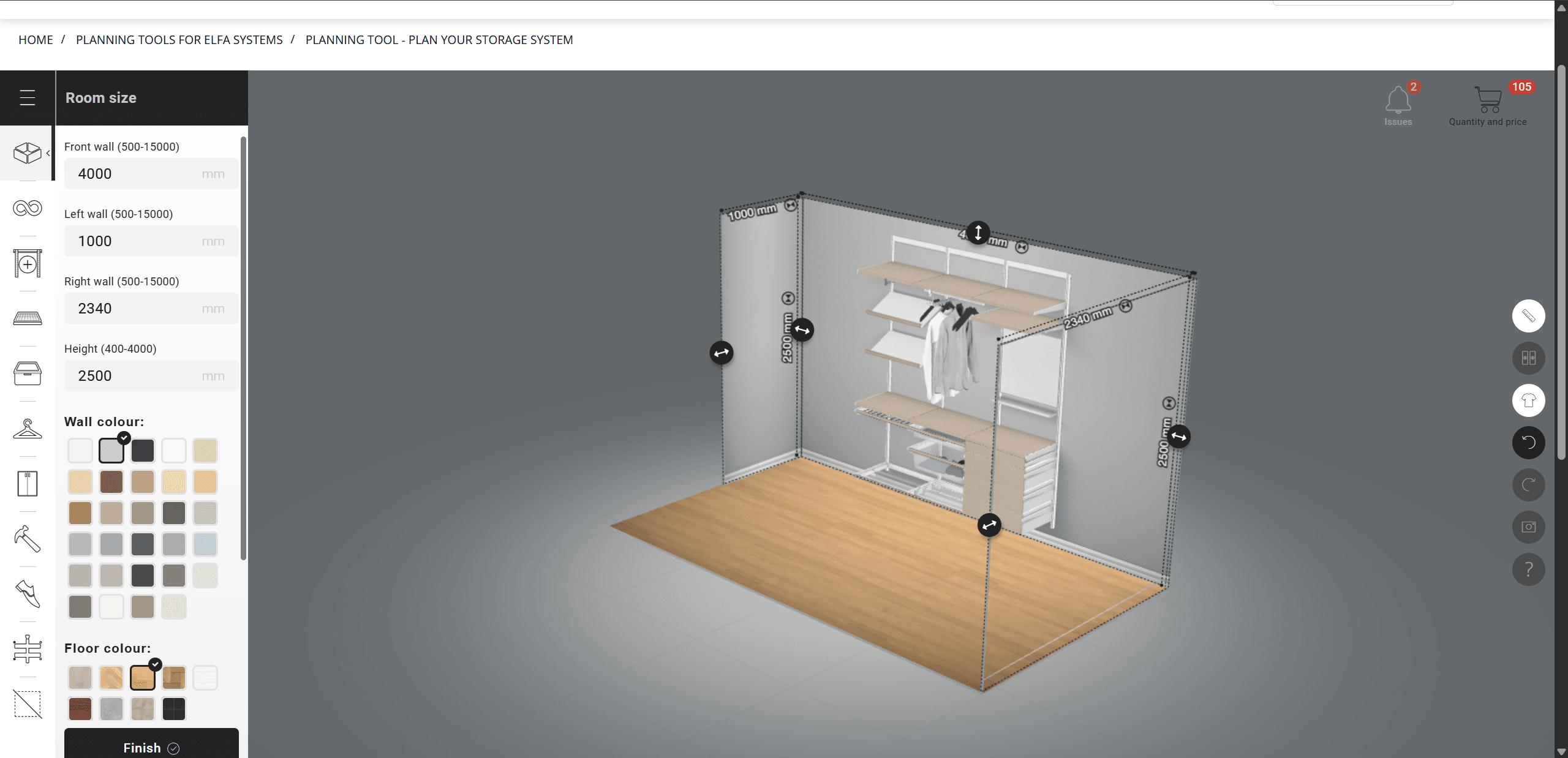

The Elfa configurator is a spatial planning tool rendering 600+ modular parts in real-time 3D, built by Animech (Uppsala, Sweden). Users define wall dimensions, then drag-and-drop shelving components into a photorealistic room environment. The system automatically generates a complete bill of materials including all screws and brackets.
What sets Elfa apart is the sheer complexity it handles while remaining accessible. Features like modular assembly, conditional logic, and environment context work together seamlessly. The full CPQ pipeline from design to quote to order list shows what a mature sales acceleration configurator looks like.
#2 — Samara Backyard ADU Configurator
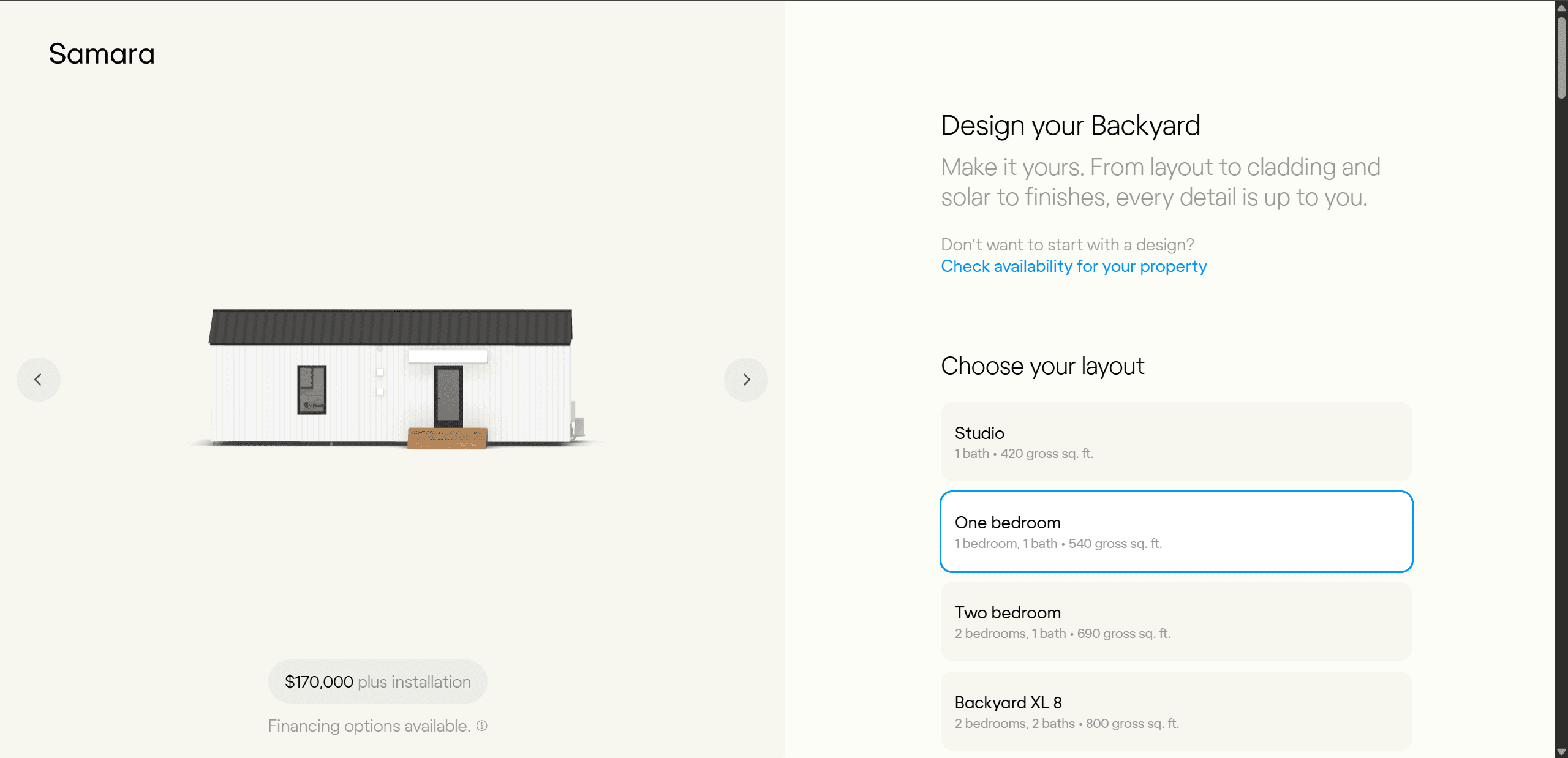
The Samara configurator achieves the highest UX score (4.8) in the entire top 10. Co-founded by Airbnb's Joe Gebbia, this configurator is the entire sales funnel entry point for a $270K–$370K purchase — rare for a configurator driving transactions at that price point.
The hybrid 2D/3D approach combines floor plan views with environmental visualisation. With only 6 features, it proves that responsive layout, material switching, and price calculation are enough when the UX is exceptional. A masterclass in doing less, better.
#3 — Nike By You 3D Shoes Configurator
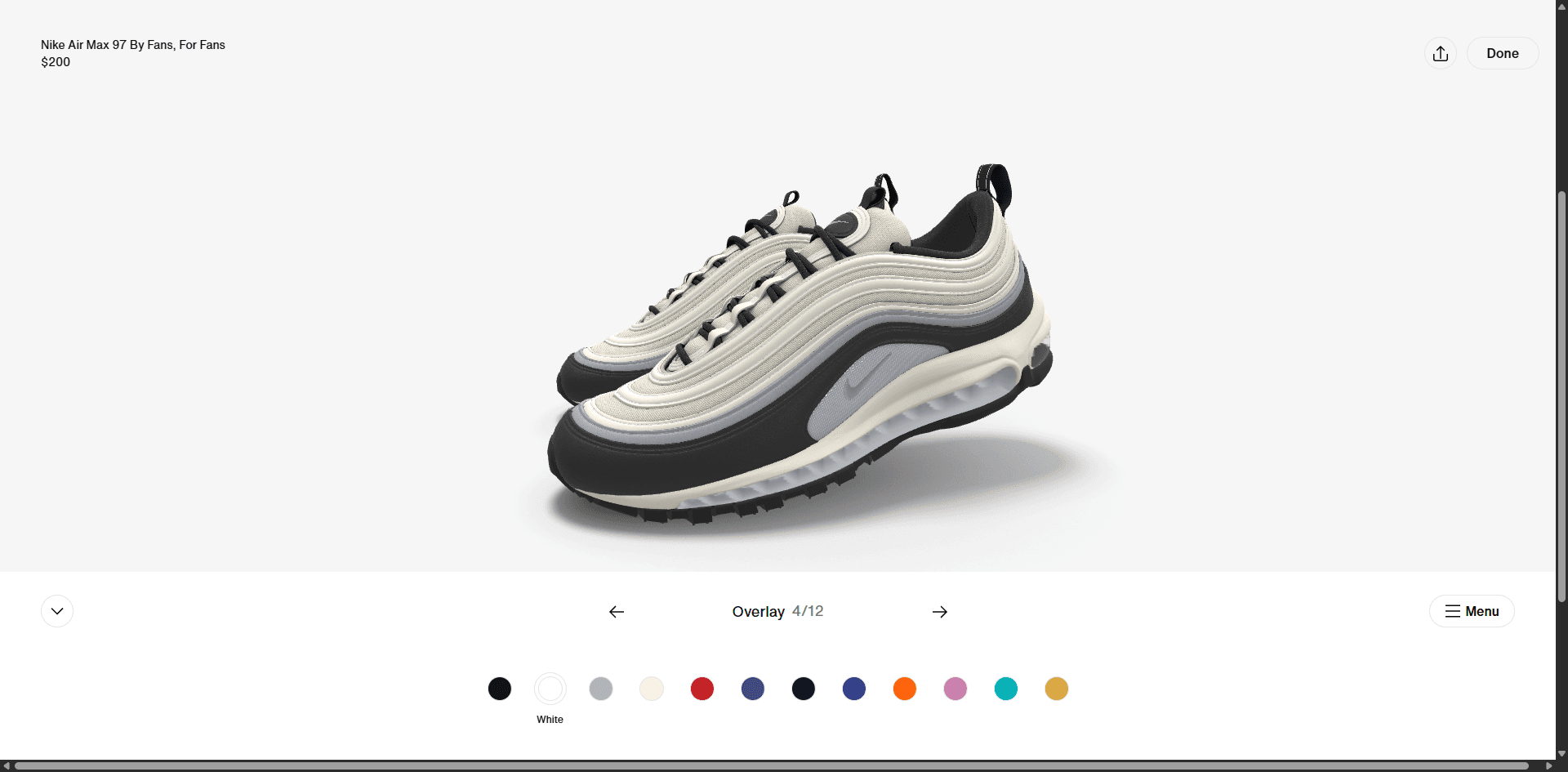
Nike By You is one of only 12 apps in our directory using Babylon.js — likely chosen for its superior PBR material rendering, critical for showing leather, suede, mesh, and fabric textures convincingly. Operating for 25+ years since 1999, it commands a 30–50% price premium over standard products.
The configurator combines material and colour switching, custom text engraving, and conditional logic across dozens of shoe zones. Nike explicitly leverages the psychological endowment effect: once customers invest time designing "their" shoe, they feel ownership and are less likely to return it.
#4 — Tylko 3D eCommerce Website
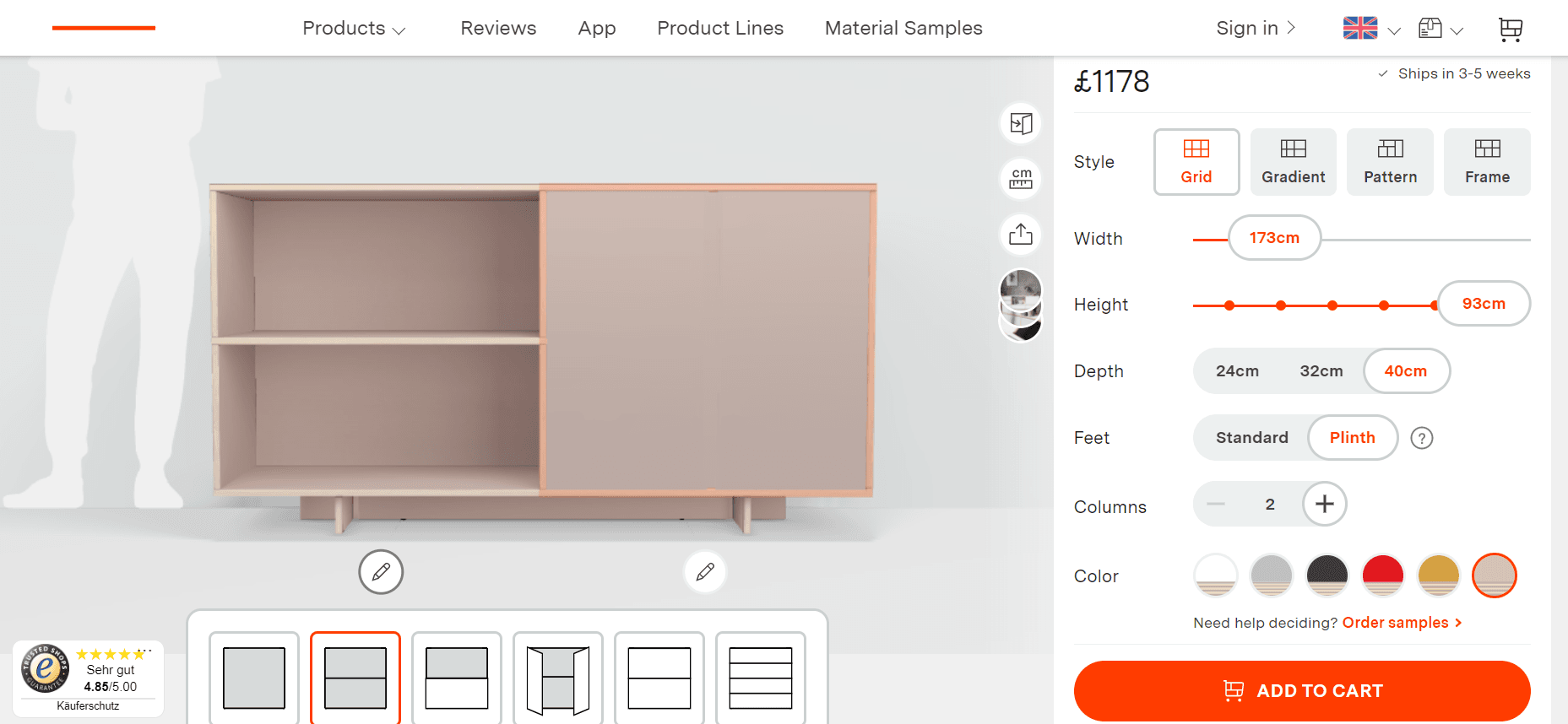

At Tylko, the configurator IS the entire business model — there is no standard product catalogue. Every piece of furniture is uniquely designed by the customer through parametric configuration, then manufactured to exact specifications via CNC. This is the most feature-rich configurator in our top 10 with 19 features.
The result? A less than 2% return rate (remarkably low for online furniture), 60,000+ customers across Europe, and $44M revenue in 2020. Tylko raised €33M through Series C, with investors citing its technology as "disrupting a furniture industry frozen in time." A prime example of how configurators drive increased order value through co-creation.
#5 — Rimowa Suitcase 3D Configurator
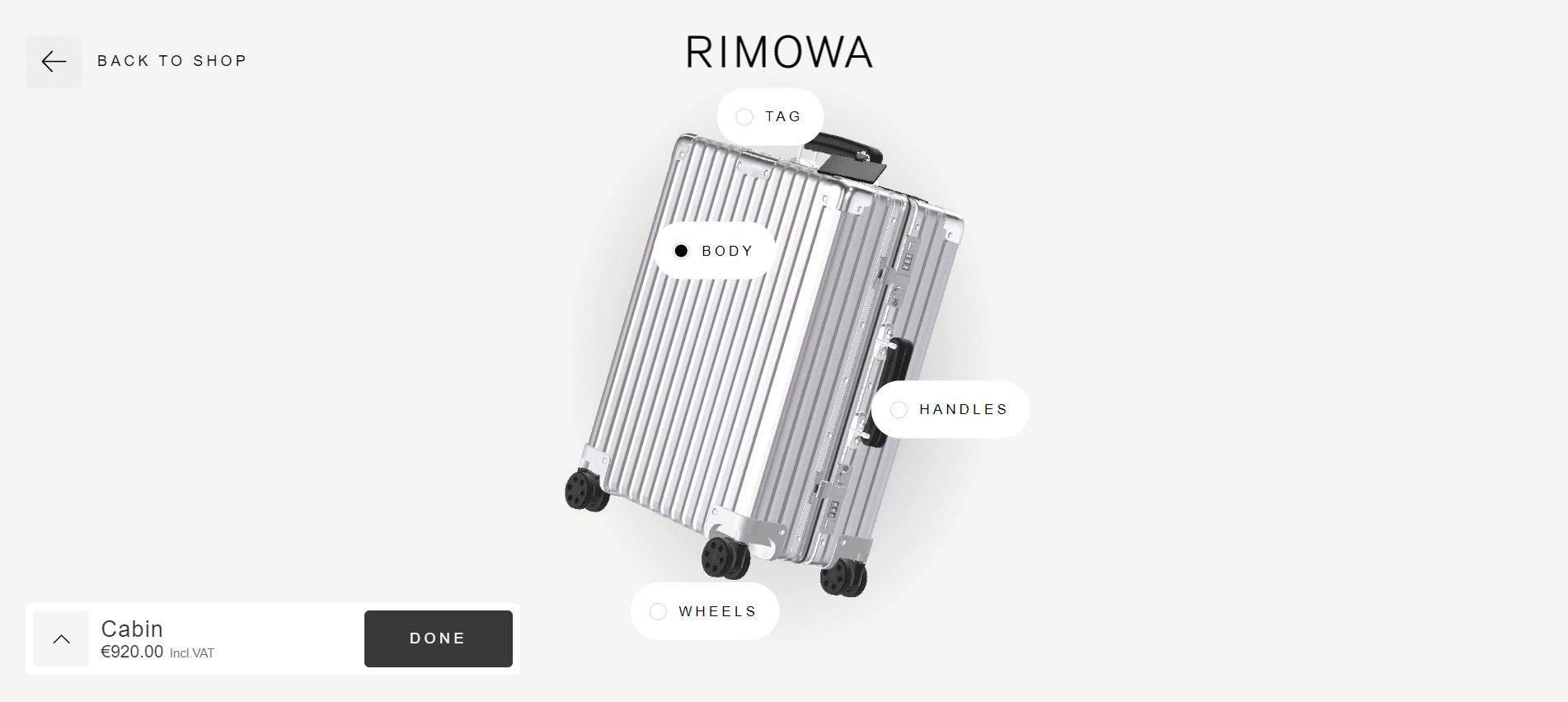

The Rimowa “RIMOWA UNIQUE” configurator, built by BETC Fullsix, won Awwwards Site of the Day and is AA accessibility compliant — rare for a luxury 3D WebGL experience. Guided camera paths and cinematic transitions create a premium feel as users customise the Classic suitcase with Nappa leather handles across 7+ colour options.
The broader e-commerce redesign (including the configurator) contributed to a 57% revenue rise between 2020 and 2021. This is luxury configuration at its finest — features like material switching and real-time pricing embedded in a brand experience that drives deeper customer engagement.
#6 — IKEA Planning Tools
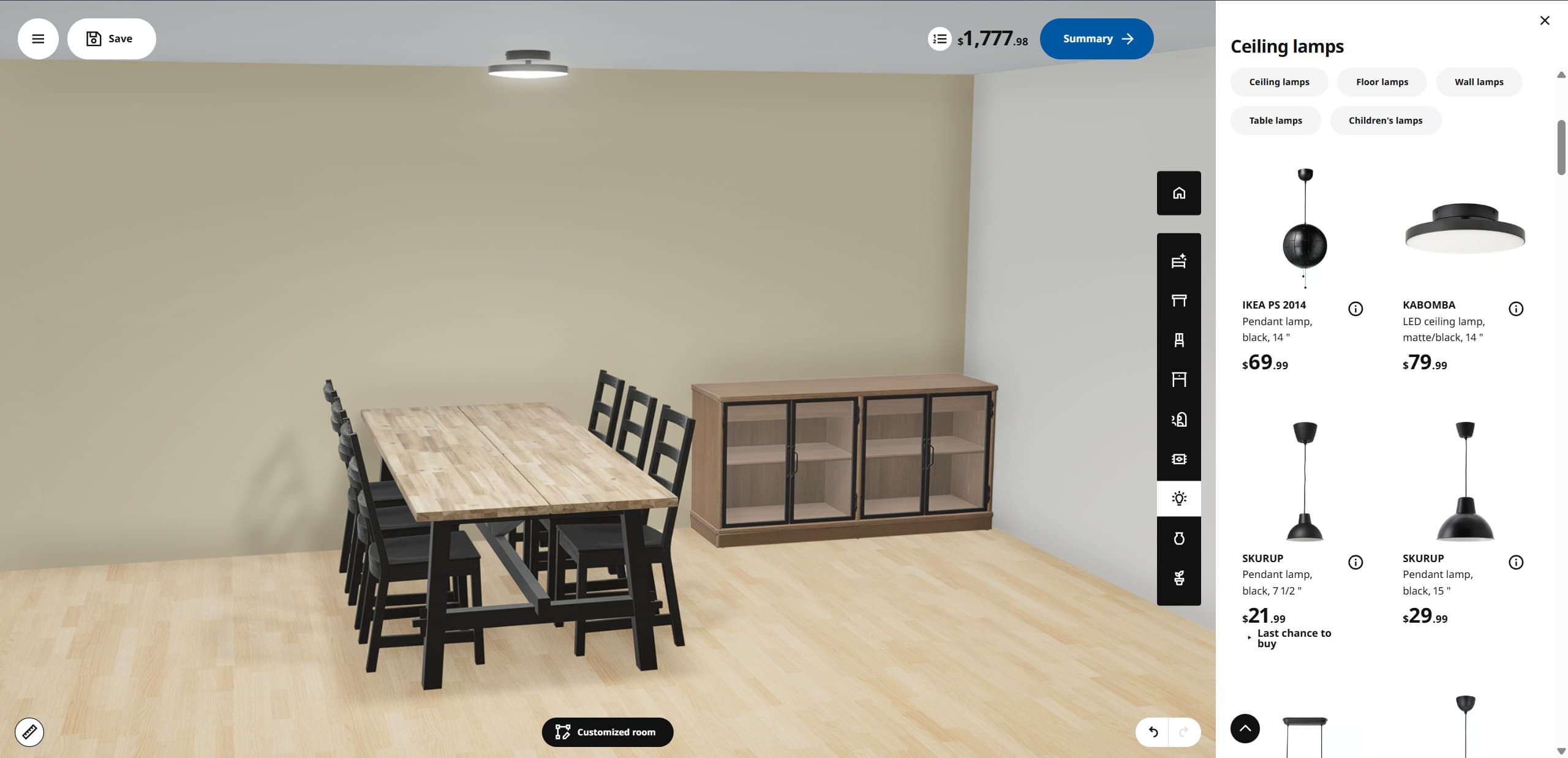

The IKEA planners span the flagship IKEA Kreativ (AI-powered room designer), kitchen planners, and specialised tools. The AI-powered room scanning and "furniture eraser" from acquired startup Geomagical Labs ($200M+ in digital acquisitions) lets users scan their actual room and digitally remove existing furniture before placing IKEA products.
At 5 billion annual digital visits and €6.7B in e-commerce revenue (2023), IKEA demonstrates configurators at unprecedented scale. The environment context, modular assembly, and AR integration create a planning-to-purchase pipeline that has helped IKEA triple online sales in three years.
#7 — OREOiD Cookie 3D Configurator
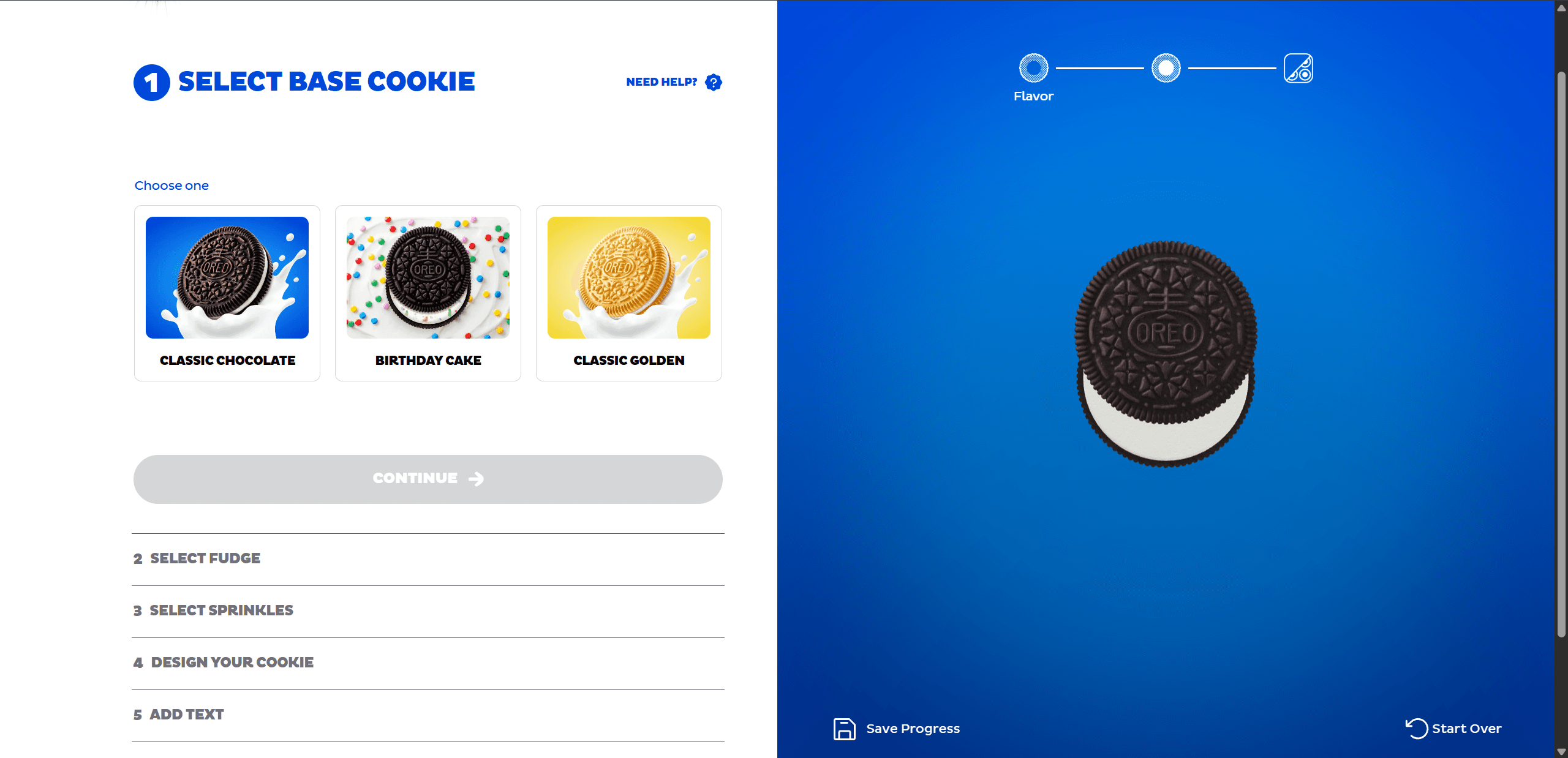
The OREOiD configurator is one of the rarest categories in our directory: a 3D food product configurator. The playful “STUF it, DIP it, DESIGN it, PACK it” flow aligns with Oreo's brand ethos while letting users print photos as edible images on cookies. Rebuilt on Shopify by agency Goodness in 2024 for optimised conversion rates.
Beyond the novelty, Mondelēz uses OREOiD as a first-party data engine. With 160+ preset designs reducing creative friction and prices starting at $3.49/cookie, it proves that configurators work beyond traditional categories. Features like price calculation and responsive layout keep the experience accessible.
#8 — Cowboy Electric Bike 2D Configurator
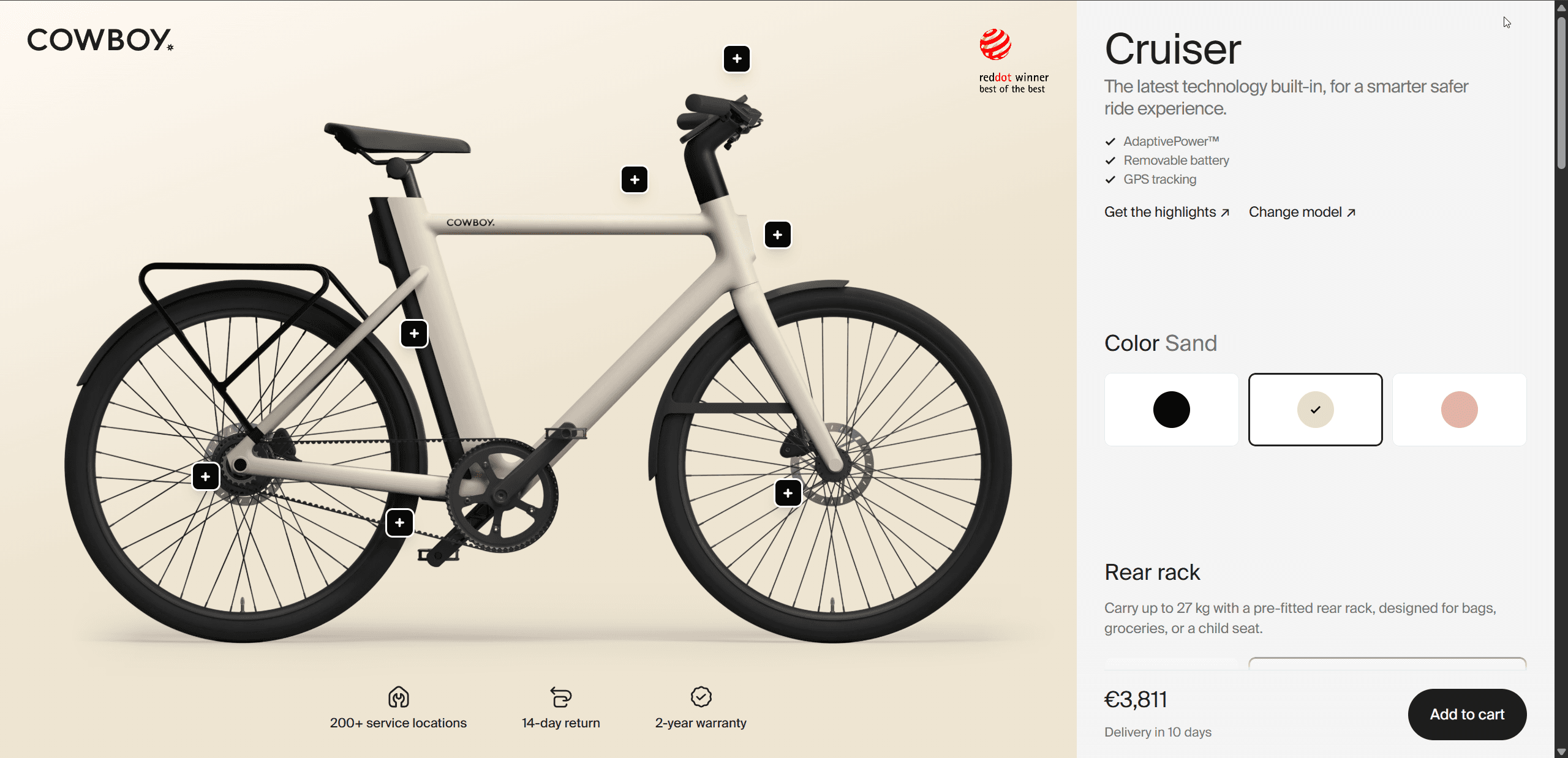

The Cowboy configurator is the highest-scoring 2D-only configurator in our top 10, deliberately using pre-rendered images from incredibly detailed 3D models by First Things Studio. Built by BASIC/DEPT® on Shopify Plus, it won Awwwards Site of the Day, CSS Design Awards, and The Webby Awards.
With just 4 features and a 4.8 Performance score, Cowboy proves you don't need real-time 3D to build a world-class configurator. The 2D approach loads instantly across all devices — including mobile, where 60%+ of e-commerce traffic happens. The result: 2.7x increase in e-commerce revenue YoY and €41M revenue in 2022 with 50,000+ bikes sold.
#9 — Oakley 2D Configurator & AR Try-On
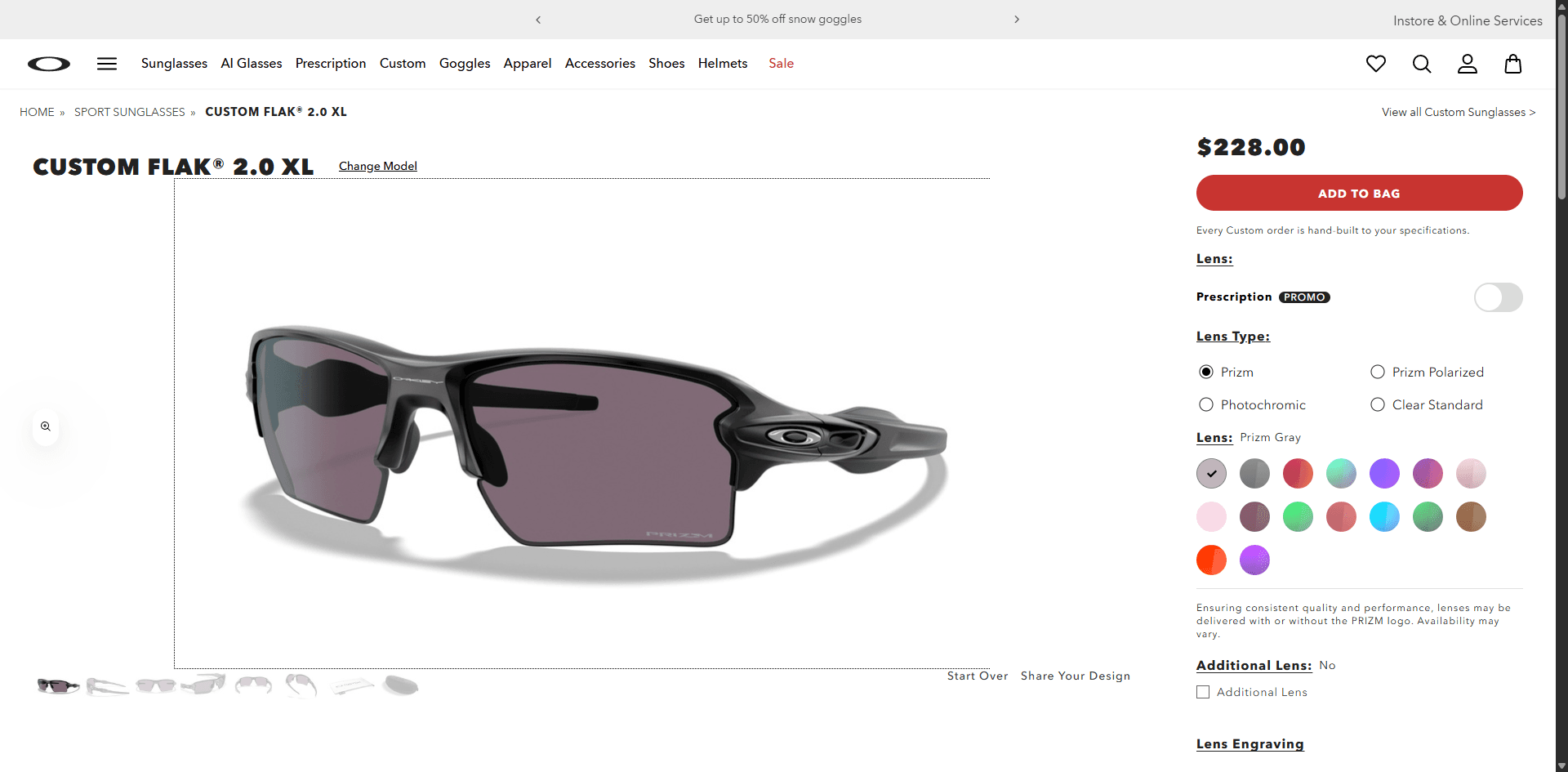
The Oakley Custom Program offers 40 million+ possible combinations across 30+ frame styles, with custom lens etching and NFL/MLB licensed logos. The hybrid 2D configurator + AR try-on combination addresses the #1 barrier in eyewear e-commerce: “Will it look good on me?”
Backed by EssilorLuxottica (€17.4B revenue), Oakley deploys AR try-on through Digital Mirrors (real-time head tracking) and Dressing Room (photo-based) modes. Industry data suggests virtual try-on increases sales by up to 30% and cuts returns by 20%. The AR engagement boost of 200% makes this a textbook case of technology driving engagement.
#10 — James Allen Diamond Ring Configurator
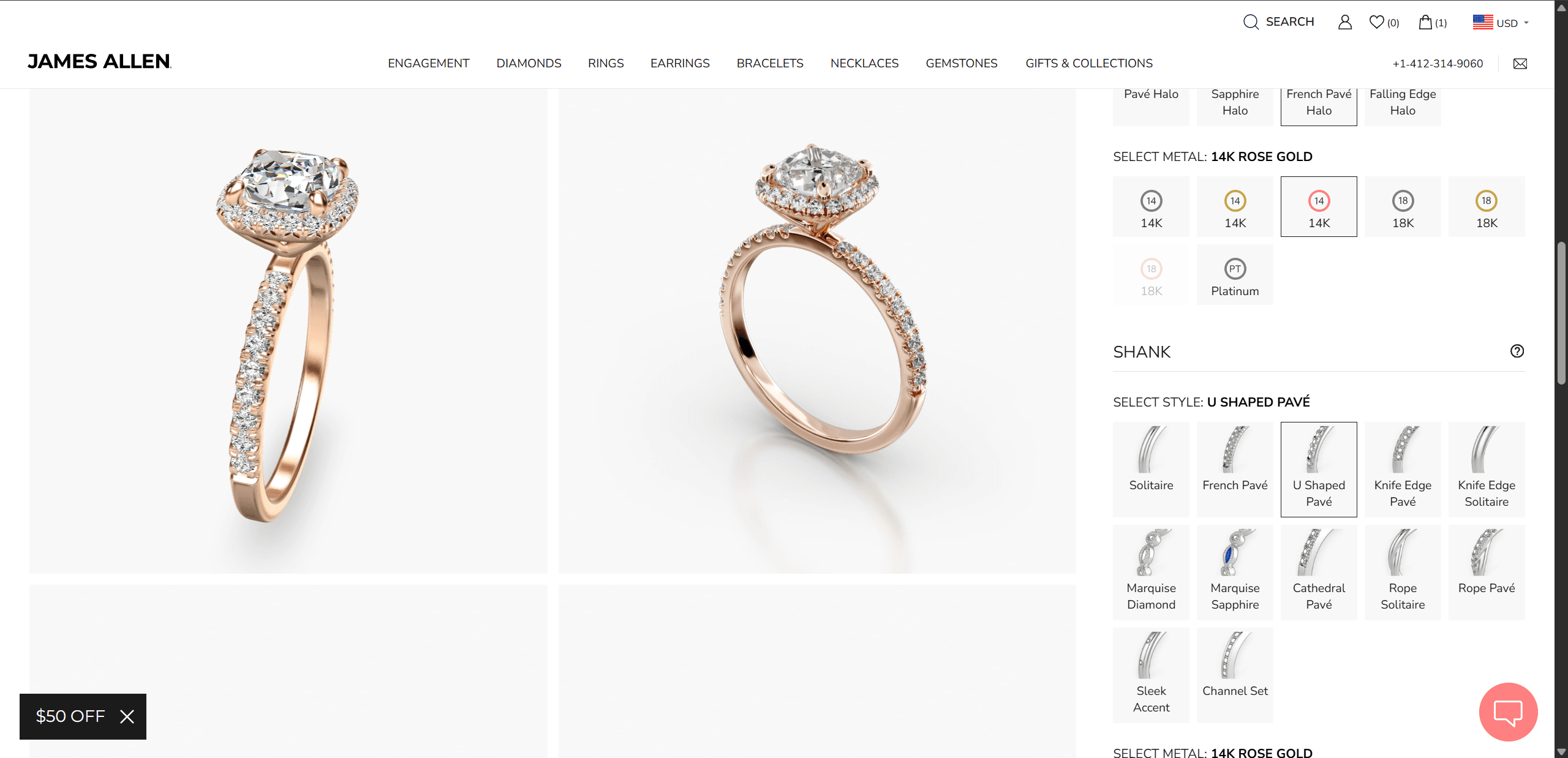
The James Allen Ring Studio uses proprietary Diamond Display Technology™ to individually photograph every diamond in a 200,000+ inventory in 360° HD at up to 40x magnification. These are not generic renders — each video shows the actual stone you'd receive.
For engagement rings averaging $3,000–$10,000+, this trust-building visualisation is critical. With 13 features including parametric configuration, conditional logic, and save/load configuration, it drove 50% web sales growth in 2016 and a $328M acquisition by Signet Jewelers — validating the configurator's business value at the highest level.
Patterns Across the Top 10
Technology: Three.js dominates
Three.js powers 7 of 10 apps. Babylon.js powers 2 (Nike and IKEA) — both massive enterprises where Babylon's built-in tooling and Microsoft backing justify the smaller ecosystem. Elfa uses Custom WebGL. The weekly NPM download ratio of Three.js to Babylon.js is 270:1, explaining the ecosystem dominance. Browse all technologies in our directory →
Features: universal versus premium
Three features appear in all 10 apps: Material & Color Switching, Price Calculation, and Responsive Layout. Beyond these table stakes, the range is dramatic: Tylko leads with 19 features while Cowboy has just 4. Crucially, feature count doesn't correlate with score — Samara's 6-feature configurator matches Elfa's 15-feature one at 4.7. Explore all features →
The co-creation effect
Several of these configurators explicitly leverage what behavioural economists call the endowment effect and the IKEA effect: when customers invest time designing a product, they value it more. Nike commands a 30–50% price premium. Tylko achieves a <2% return rate. Bain & Company found customers are willing to pay 20% more for customised products. This psychological mechanism is what drives increased average order value and reduced returns simultaneously.
Do 3D Configurators Actually Improve Conversions?
The evidence from both research and these real deployments is overwhelming:
- 94% higher conversion with 3D/AR content (Shopify)
- 40% fewer returns with 3D/AR visualisation (Shopify)
- 82% of visitors activate the 3D viewer when available (Cappasity)
- 2.7x revenue increase for Cowboy after their configurator redesign
- 57% revenue rise for Rimowa's e-commerce channel
- 132% sales spike for Tylko during COVID
- $328M acquisition of James Allen, driven by configurator technology
The business outcomes are well-documented: configurators drive higher conversion rates, reduced returns, increased order value, faster sales cycles, and deeper engagement. Explore the evidence →
Choosing the Right Approach
By industry
The right configurator approach depends heavily on your industry. Furniture benefits most from spatial planning with environment context and modular assembly (Elfa, IKEA, Tylko). Fashion needs photorealistic material rendering and often AR try-on (Nike, Oakley, Rimowa). Jewelry demands extreme visual fidelity and trust-building at high price points (James Allen). Browse all industries →
2D vs. 3D: it depends
Cowboy's success with a 2D-only configurator scoring 4.5 proves that real-time 3D is not always necessary. If your product has limited visual customisation (colour only), pre-rendered 2D images deliver superior performance, especially on mobile. Reserve real-time 3D for products where spatial understanding matters — furniture placement, modular assembly, or detailed material inspection.
Feature priorities
Start with the MVP feature set found in all top 10 apps: material switching, responsive design, and real-time pricing. Then add differentiators based on your use case: AR preview for fashion and furniture, parametric configuration for made-to-order products, conditional logic for complex product rules.
What's Next: 2026 Trends
WebGPU goes mainstream. Now production-ready across all major browsers since Safari v26 (September 2025), WebGPU delivers up to 10x improvement in draw-call-heavy scenarios. Three.js r171 made WebGPU zero-configuration with automatic WebGL 2 fallback.
AI-powered configuration. IKEA Kreativ's AI furniture eraser and room scanning are early signals. Expect AI to assist with recommendation engines, automated 3D model generation, and natural language configuration (“show me something modern in oak”).
Mobile AR becomes expected. With 60%+ of e-commerce on mobile and 75% of mobile AR users reporting satisfaction, AR is shifting from differentiator to expectation — especially in furniture (60–80% conversion lift) and fashion accessories (30–45% lift).
Explore the Full Directory
These 10 apps represent the peak, but there are 100+ more to discover. Browse the full directory, filter by industry, technology, feature, or product type, and find the right inspiration for your next project. Every app is independently scored, with detailed breakdowns you won't find anywhere else.