Awwwards Alternatives for Researching Browser 3D Before You Hire

Someone at your company has asked you to "research 3D configurators before we hire anyone," and a search for sites like Awwwards turns up design-award galleries. Those galleries are useful, but they answer a designer's question rather than a buyer's.
The timing makes it messier. The FWA announced that Site of the Day and Site of the Month would end on November 2, 2026, with a new FWA from November 3. Most legacy winner pages, case studies and agency profiles don't move to the new platform; the exceptions are the 2026 Site of the Month winners and the win counts of studios with 10 or more awards.
If your team saved FWA winners as reference links, check them now. It's also a good moment to look at what each research site actually judges, and which ones help you choose who builds your configurator.
The short answer
Awwwards and the FWA show the ceiling of design craft. Configurator Database shows who in your category sells with a configurator, and engine showcases or vendor galleries show what one technology or platform can do.
Clutch and DesignRush help you long-list agencies, with sponsored firms placed higher. None of them is built to score a browser 3D configurator as a buying tool, which is what interact.gallery does with 10 sub-scores per listing.
Each site answers a different question:
- "What does great 3D web design look like?" Awwwards, the FWA, CSS Design Awards.
- "Who in our category already has a configurator?" Configurator Database.
- "What can Three.js, Babylon.js or PlayCanvas do?" The engine showcases.
- "What can this SaaS platform do?" The vendor's own examples page.
- "Which agencies offer 3D work?" Clutch and DesignRush.
- "How good is the buyer experience in our industry?" interact.gallery.
How do Awwwards alternatives compare for buyers?
They differ less in quality than in the job they do. Awwwards weights Design at 40% of its score, Configurator Database lists 1,472 configurators without scoring any, and agency directories place sponsors above everyone else. Here's what each one judges, side by side.
| Site | What it judges | 3D focus | Industry filter | Perf/UX scores | Credits the builder | How it makes money | Best for |
|---|---|---|---|---|---|---|---|
| Awwwards | Design craft: Design 40%, Usability 30%, Creativity 20%, Content 10% | About 4,400 sites tagged 3D | No product-type or configurator filter | Jury scores, public only for Site of the Day winners | Yes, the submitter and listed team | $65 per submission | Seeing the design ceiling |
| The FWA | Design craft, via a blind jury in a public live queue | Mixed; all digital work, no 3D category | No configurator filter | Jury verdict; FWAi critique without a vote | Old credits mostly not migrated | £99 per submission | Watching new work get judged |
| CSS Design Awards | Design; Website of the Day needs a judge average above 8.00 | WebGL and VR tags, no 3D tag | Yes, 19 broad industries | Judge UI, UX and innovation scores on site pages; no performance score | Yes, the agency or studio | $50 per submission | A second design opinion |
| Configurator Database | Nothing; it lists 1,472 configurators | No 3D or AR flag | Industry, country, product | None | No | Paid report books (latest: 2017/18) | Breadth in your category |
| Engine showcases (Three.js, Babylon.js, PlayCanvas) | Curation for one engine | All 3D | None on Three.js; PlayCanvas has a Configurators section | None | Often, since makers post their own work | Free; supports the engine | What one engine can do |
| mesh3d.gallery | Editor-picked WebGL sites, mostly Three.js | All 3D | Site type and subject, plus a configurator filter | None | Yes, the studio or designer | Free submissions; founding partners | Recent WebGL work |
| Vendor example lists (Emersya, 3D Cloud, VividWorks) | The vendor's own selection | 3D-focused | Sometimes (VividWorks: furniture) | None | Mostly the vendor's own platform | Selling the platform | What one platform can do |
| Clutch, DesignRush | Agency listings, with sponsors placed above others | AR/VR and 3D modeling categories | Yes, by client industry | No 3D quality score | Firm profiles are the listing | Sponsored placement | Long-listing agencies |
| interact.gallery | The buyer experience: 10 sub-scores on performance and UX | Browser 3D, each listing labeled 3D, 2D, hybrid or pixel streaming | Yes, plus feature, engine and commerce | Yes, 1 to 5 per sub-score | Yes, when we can identify it | Free to browse | Benchmarking a shortlist in your industry |
Figures for other sites were checked on October 21, 2026.
What does Awwwards judge, and what does it leave out for buyers?
Awwwards judges design craft, and it's open about how: a jury of at least 18 scores each site and drops the three outlier scores. The weights are Design 40%, Usability 30%, Creativity 20% and Content 10%, per its evaluation page, and studios pay $65 per submission.
The 3D volume is real. Counting its tag pages in October 2026, we estimate about 4,400 sites tagged 3D, about 3,200 tagged WebGL and about 2,100 tagged Three.js. That's the largest pool of WebGL website examples among the sites in this guide.
What it doesn't give a buyer is a way to filter by the job. There's no product-type or configurator filter, so a sofa configurator shares the 3D feed with studio portfolios and campaign microsites.
Jury scores are public only for Site of the Day winners, so for most tagged sites you see the work without the verdict. The directory also has no hire or contact feature, which leaves the step from inspiration to shortlist to you.
Use Awwwards to calibrate ambition and to find studios with strong visual craft. Then check those studios' commercial work on a phone, because an award-winning portfolio site and a fast product configurator are different builds.
Its Developer Award does look at speed. Site of the Day winners go to a developer jury that gives web performance and mobile 20% of the score each, but most tagged sites never get that review.
What changed at the FWA after November 3?
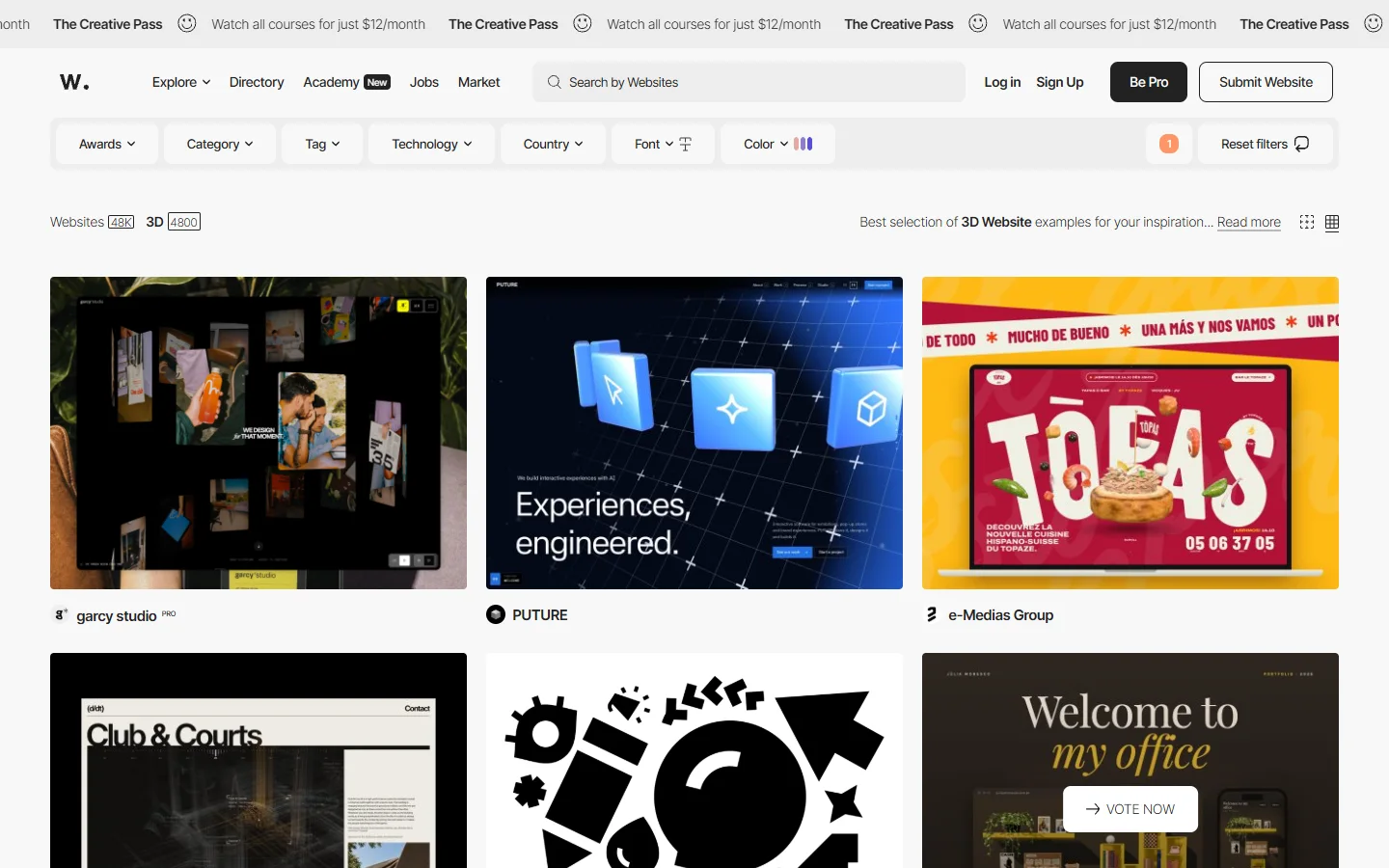
The new FWA stops awarding every day. From November 3, 2026, according to the FWA's announcement, a blind jury judges each entry in a public live queue, and only work that clears the bar wins. An AI critique called FWAi writes a report on each site without voting, and submissions cost £99, up from £70.50.
For buyers, the bigger change is the archive. Most legacy winner pages, case studies and agency profiles don't carry over, so the FWA no longer keeps a full record of who built what. If you relied on it to vet a studio's track record, ask the studio for live links instead.
The live queue could be handy for seeing what studios ship this month. Like Awwwards, though, it judges craft rather than whether a product page helps someone buy.
CSS Design Awards and smaller galleries
For a second design opinion, a few smaller sites are worth a quick pass. CSS Design Awards charges $50 per submission, and a site needs a judge average above 8.00 to win Website of the Day. It tags work as WebGL or VR but has no 3D tag, and each site page shows its judges' UI, UX and innovation scores.
Orpetron runs a similar jury, but it weights development as much as design, and it tags 3D, WebGL and Three.js work. A jury review is free, and $50 makes a site eligible for Site of the Day. Pure 3D website inspiration galleries go lighter still: One Page Love's 3D tag held 235 sites in October 2026, and Godly now redirects to recent.design.
Treat all of these as mood boards. They help a designer brief a look, but they won't show you how a configurator handles pricing or a phone screen.
Is Configurator Database the biggest list of product configurators?
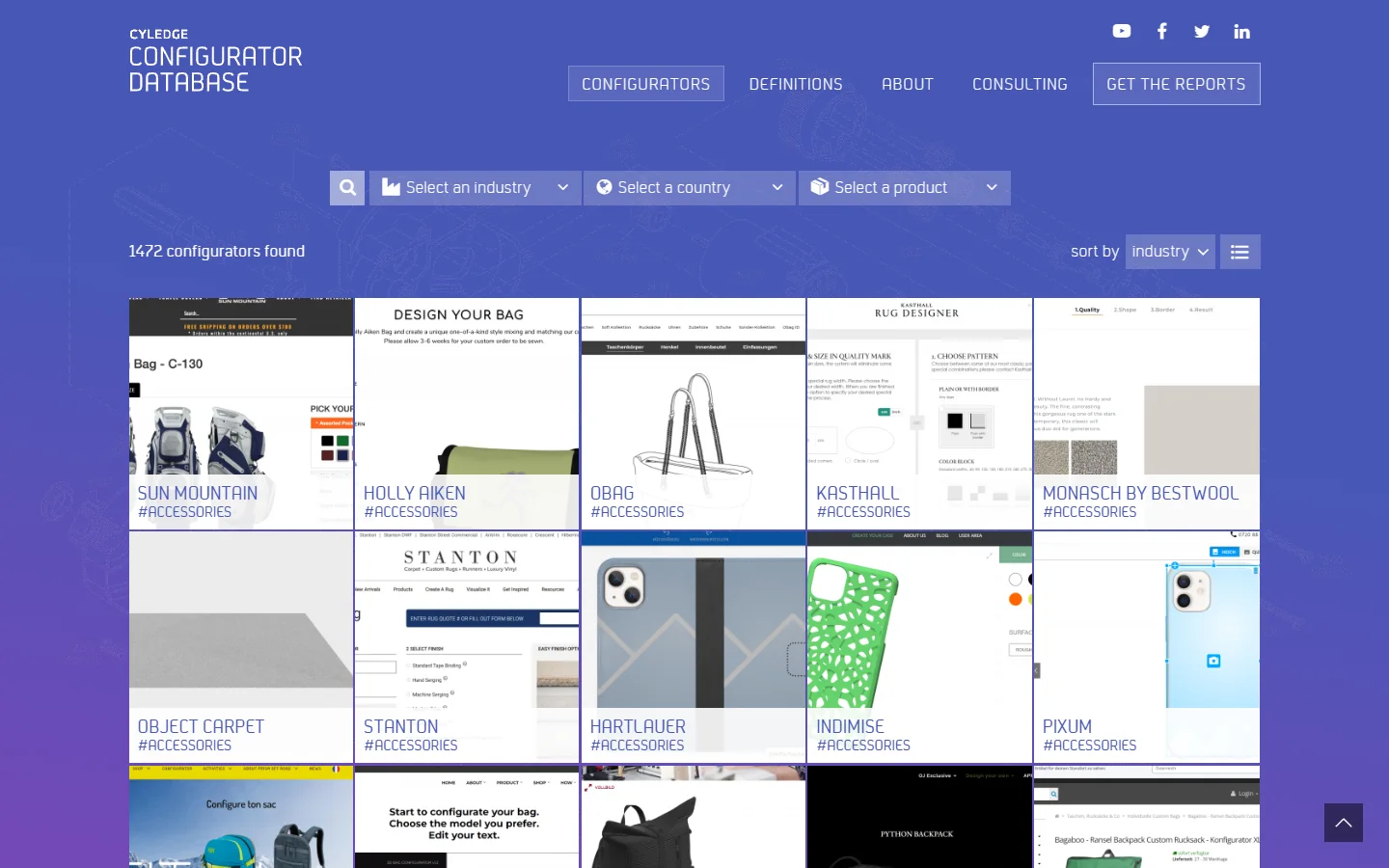
For breadth, yes. Configurator Database, run by Vienna-based cyLEDGE since 2007, lists 1,472 configurators you can filter by industry, country and product. To see which competitors sell with any kind of configurator, start here.
What it doesn't record matters for a 3D decision. There's no 3D or AR flag, no score, no tech stack and no builder credit, so every entry looks the same until you open it.
Expect many entries to be flat images. A cyLEDGE paper at MCP-CE 2022 cites a 2021 study of the 97 most-visited Configurator Database entries. Of those, 73.2% showed the product as flat 2D or layered images, and 22.7% allowed 360-degree rotation.
The research has aged, too. The latest paid report book is the 2017/18 edition. Read the listings as a map of who has tried, not a measure of how well it went.
What do engine showcases like Three.js, Babylon.js and PlayCanvas show?
They show what one engine can do, picked by people who back that engine. The Three.js homepage grid holds about 300 projects with no filters, and new work goes through a moderated showcase category on its forum. If you're hunting for the best Three.js websites, that forum category is the place to watch.
The Babylon.js community page collects about 200 demos, including e-commerce configurators. PlayCanvas Explore has its own Configurators section, the closest of the three to a buyer's filter.
Newer and narrower, mesh3d.gallery launched in 2026 as an editor-picked gallery of WebGL sites, mostly Three.js. It has no scores, but you can filter by site type, engine, a configurator tag and even page weight. Sketchfab, a common host for embeddable 3D models, has a new owner after Epic sold it and ArtStation to KitBash in August 2026.
Engine choice is usually your builder's call, not yours. These pages help most once a shortlisted studio names its stack and you want to see that engine at its best. Our listings also filter by Three.js, Babylon.js and PlayCanvas.
Why do vendor example lists mostly show their own clients?
Because they're portfolios, which is fine once you read them that way. Emersya's Top 10 configurator examples, updated October 13, 2026, includes six built on Emersya. VividWorks' list of furniture configurators features six of its own clients out of ten.
3D Cloud, formerly Marxent, publishes 20 examples. Its platform runs real enterprise work: the Herman Miller Aeron page loads 3D Cloud by Marxent, according to the page source.
These lists rank well in search, and the examples are genuine. What they can't offer is a comparison with competing platforms or with custom builds.
On interact.gallery, platform builds sit next to custom ones under the same rubric. Schmidt's kitchen planner, built with Hapticmedia, and Yeti's cooler customizer, built with Threekit, are two of them.

Schmidt Kitchen 3D Configurator
 Schmidt

Yeti Custom Shop Cooler 2D Configurator
 Yeti
Can Clutch or DesignRush tell you who builds good browser 3D?
They can tell you who offers it, not how well they build it. Clutch's AR/VR category lists about 6,400 companies, and its help center states that sponsors appear above non-sponsors. DesignRush lists about 980 "3D modeling" firms, with sponsored placements above organic ones.
Neither directory tests the 3D work its firms ship. Sortlist works a little differently: it's free for buyers and matches your brief to agencies, which pay to respond, and its ranking also counts how much an agency spends on visibility.
Use these directories for a long list, then ask every firm for live URLs of browser 3D it built, not videos or renders. Does the work hold up on your own phone, on mobile data? Check before the first call.
What does interact.gallery measure instead?
interact.gallery scores the buyer experience of live browser 3D rather than visual design alone. Each listing gets 10 editorial sub-scores from 1 to 5, explained in how we score interactive 3D apps.
Five sub-scores cover performance: stability, initial load feel, responsiveness, asset strategy, and feedback and constraints. The other five cover UX: mobile, interactivity, clarity, findability and decision aids.
Listings are also tagged by industry, feature, engine, commerce type and rendering mode. The rendering label records what reaches the browser, so 30 of our listings are marked 2D. That includes Lamborghini's configurator, whose images are rendered on demand from a live 3D scene in the cloud, a trade-off our car configurator guide covers.
Sub-scores show where builds fall short. Mobile is one of the weakest across the catalog, averaging 3.55 out of 5, and 17 listings score below 3 on phones. The mobile gap looks at why.
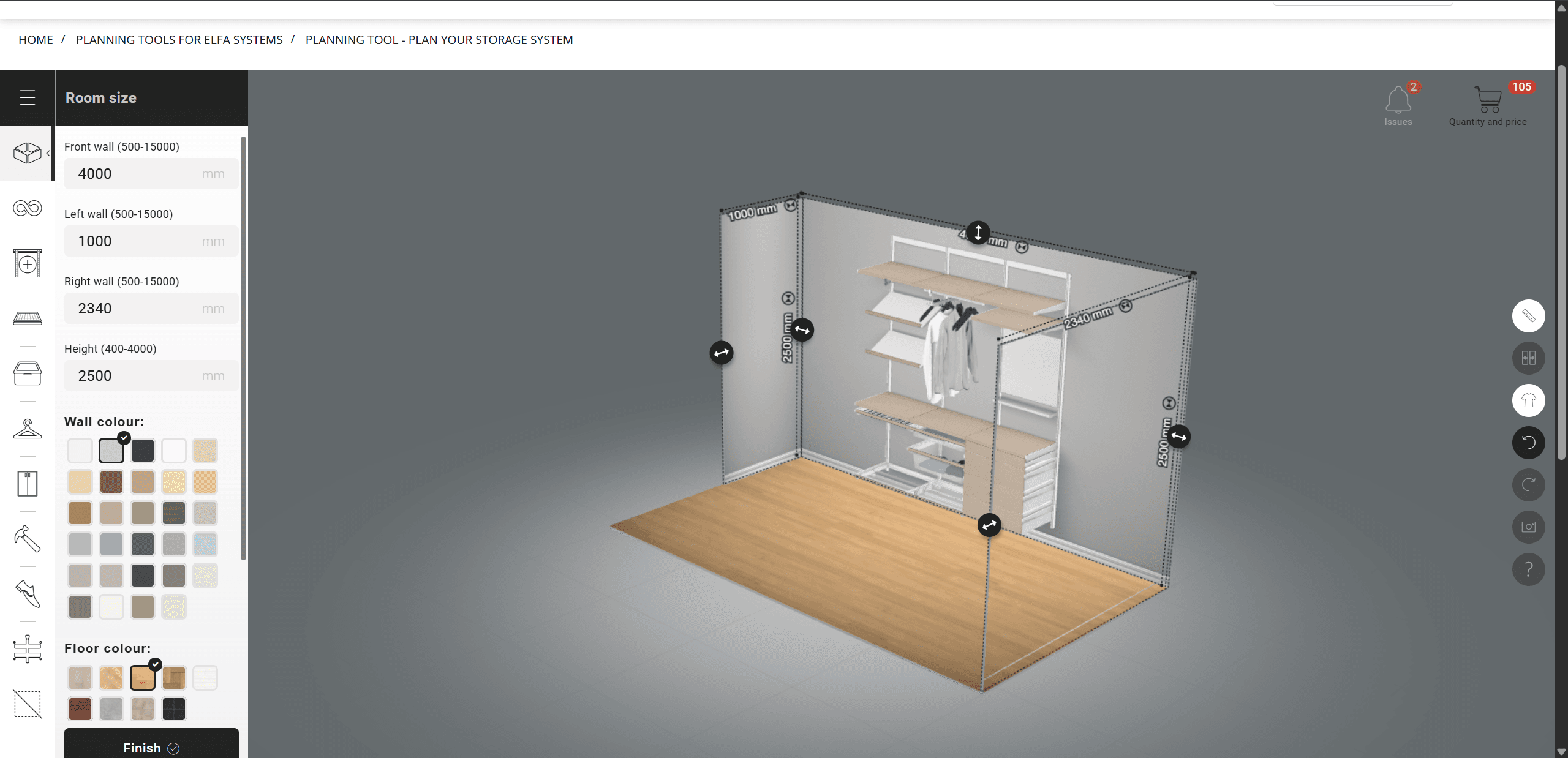
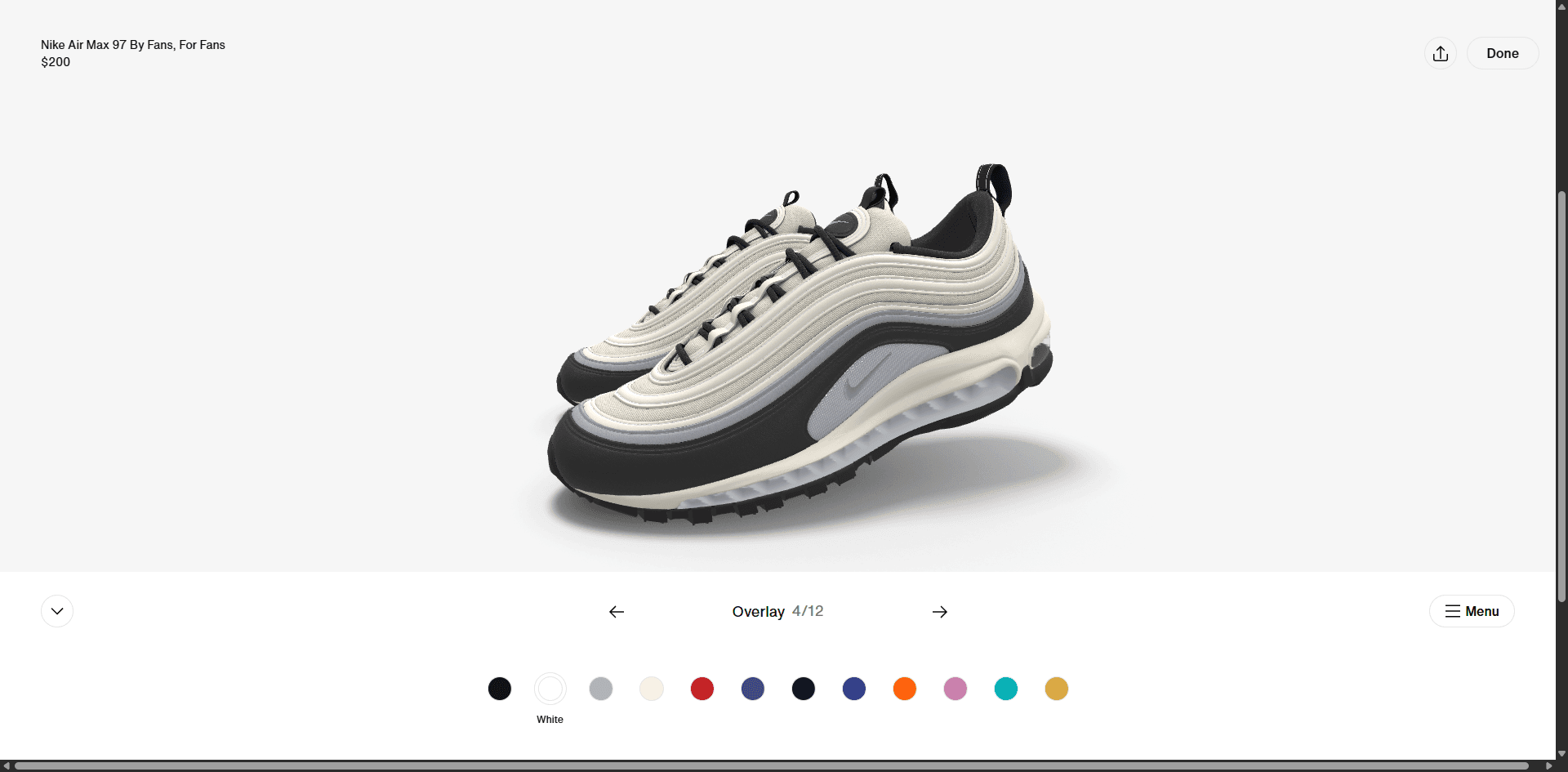
Well-scored listings come from very different builds. Elfa runs on custom WebGL, Nike By You on Babylon.js and NORQAIN on PlayCanvas, while Cowboy serves 2D images.
Elfa Storage System 3D Planning Tool
Elfa
Nike By You 3D Shoes Configurators
Nike

NORQAIN Watch Configurator
 NORQAIN
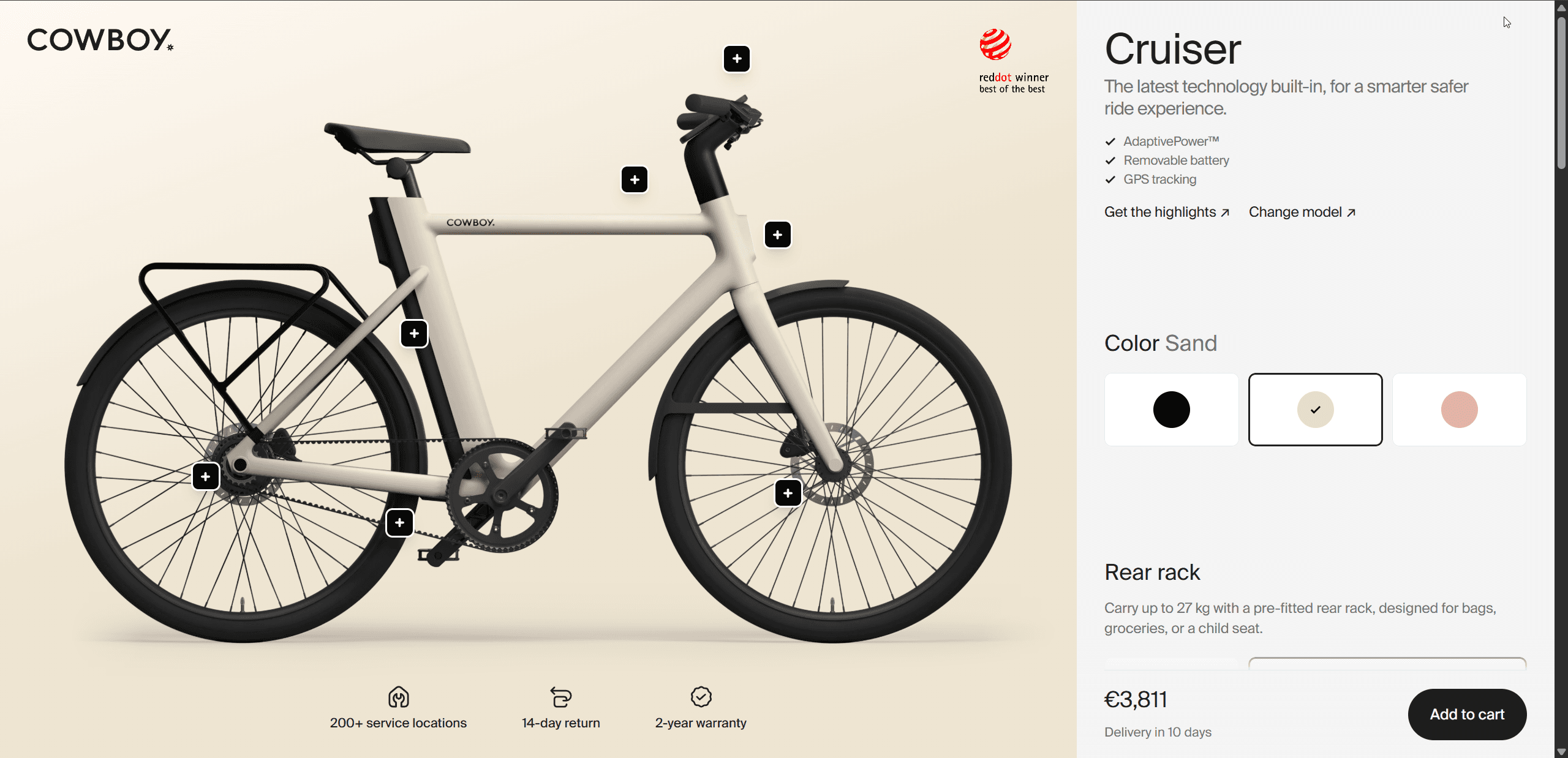
Cowboy Electric Bike 2D Configurator
 Cowboy
Where interact.gallery is weaker
The biggest limit is size. interact.gallery currently scores 150 live listings, against about 4,400 3D-tagged sites on Awwwards and 1,472 entries on Configurator Database. If a competitor of yours isn't listed, that's a gap in our coverage, not a judgment on them.
One editorial voice. A small team scores every listing against one rubric. That keeps scores consistent, but there's no jury of 18 or more and no dropping of outliers, so our blind spots carry through.
Few user reviews so far. The displayed score blends editorial (70%) and user reviews (30%) when both exist. Few listings have reviews yet, so in practice you're reading our editorial view.
No field performance data yet. Load feel and responsiveness come from hands-on test sessions, not from field Core Web Vitals collected from real visitors. A configurator that feels quick on our test devices can still struggle on a mid-range phone with a weak signal.
Scores are snapshots. Live sites change after we review them. Check the last-updated date on a listing before you quote its score to your team.
A research workflow before you hire
A defensible research pass uses each site for the job it does best, in five steps. Start wide with craft and breadth, narrow to builders, then test the shortlist against the experience your shoppers will actually get.
- Set the visual bar. Browse the Awwwards 3D tag for an hour and save five or six sites your team would be proud to ship. Note who built them, since the directory won't put you in touch.
- Map your category. Filter Configurator Database by your industry and product to see which competitors sell with any configurator at all. Open each one and note whether it's real-time 3D, a 360-degree spin or flat images, because the listing won't say.
- Check platforms and engines. If a SaaS platform is on the table, read its examples page and count how many entries are its own clients. If a studio names its engine, look at that engine's showcase to see the stack at its best.
- Long-list builders. Use Clutch or DesignRush to find agencies, remembering that sponsors sit at the top. Ask each firm for live URLs of browser 3D it built, then open every link on a phone.
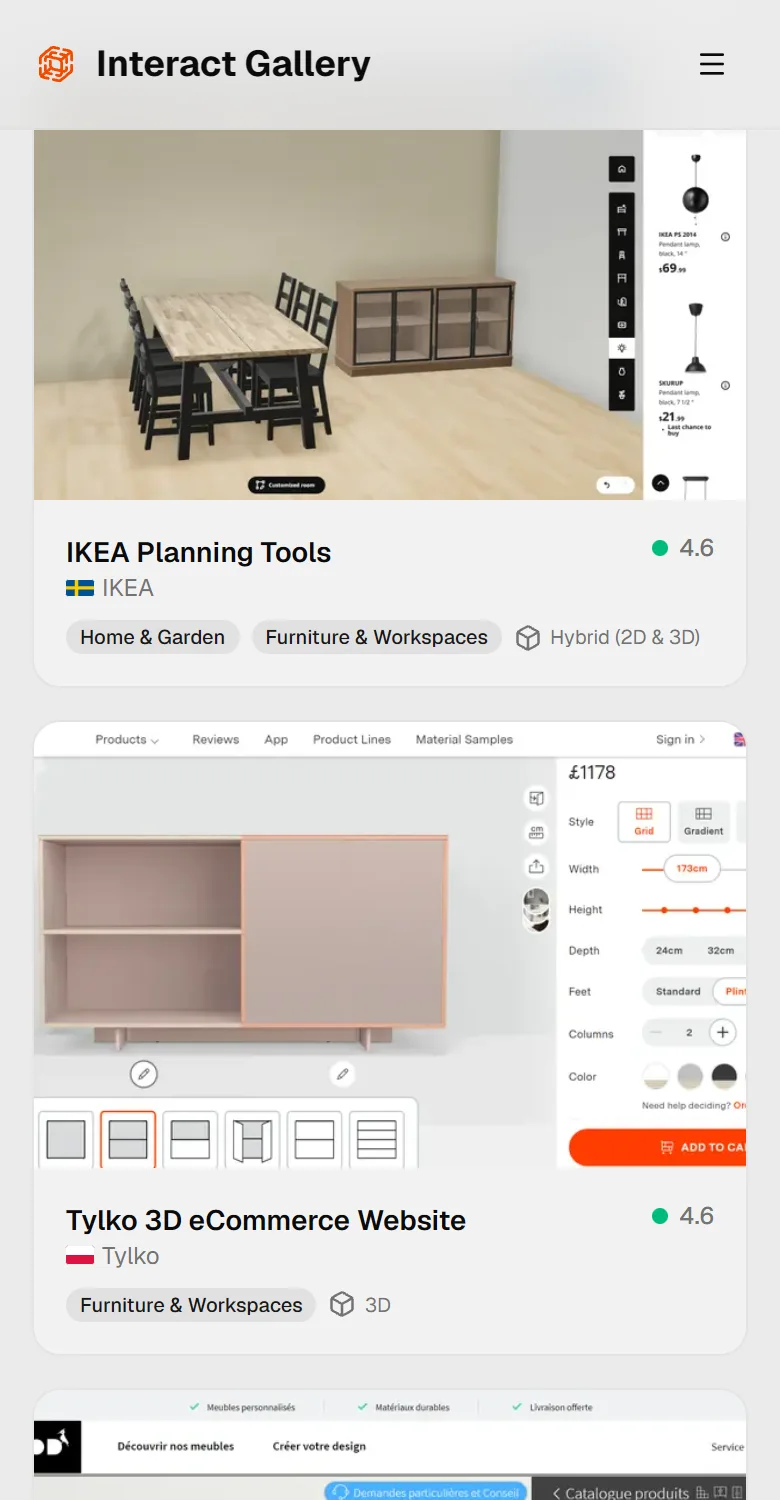
- Benchmark the shortlist. Open your industry on interact.gallery, such as the 28 furniture and workspace listings we score. Compare your shortlist's live work with the top-scored ones on mobile, load feel and decision aids. If you already run a configurator, send it to Score my configurator for a free review on the same 10 sub-scores.
Take the notes from all five steps into your brief. Our guide to what a 3D product configurator costs covers the budget side.